
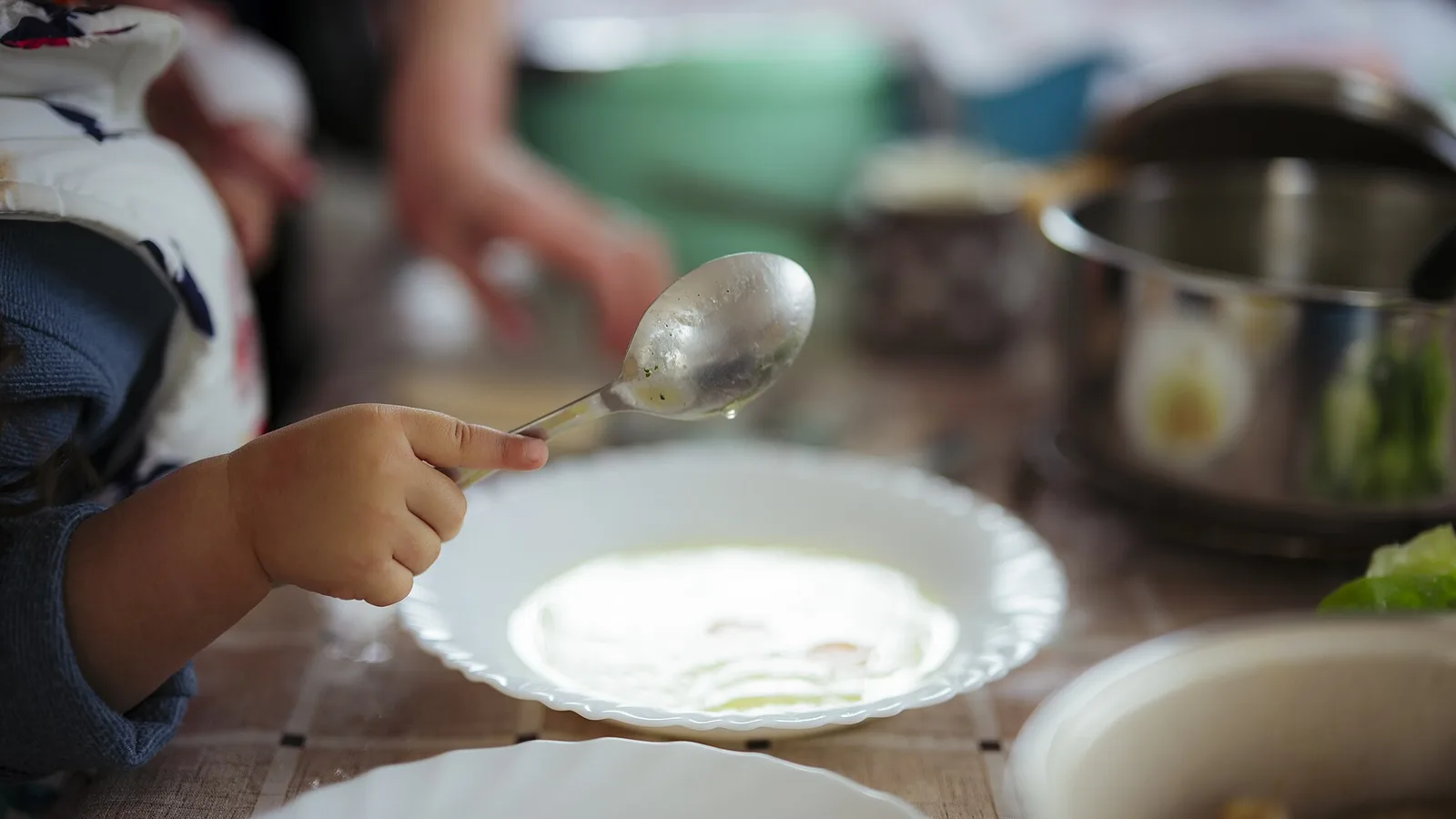
Practical life activities are the ordinary tasks children see adults doing every day: washing, carrying, preparing food, caring for belongings, and contributing to a shared space.
In Montessori, these are not pretend chores designed to keep a child busy. They are purposeful experiences that coordinate movement, support orderly thinking, build concentration, and allow the child to participate in real life.
The best activity is not the most photogenic one. It is the one your child is developmentally ready to attempt, can understand from beginning to end, and has a genuine reason to do.
Before choosing an activity
Start by observing current interests and abilities. A child repeatedly opening containers may be ready for jars and lids. A child eager to work beside you in the kitchen may be ready to wash produce or transfer ingredients.
Prepare for success:
- use child-sized quantities rather than toy versions of every tool
- isolate one clear skill at first
- arrange materials from left to right in the order they will be used
- include cleanup in the activity
- demonstrate slowly with few words
- stop before either adult or child becomes overwhelmed
Always supervise according to your child, the tool, and the environment. Water, glass, food, cleaning products, sharp tools, heat, and small objects require individual safety decisions.
Care of self
1. Pulling up elastic-waist trousers
Offer a stable place to sit and clothing with manageable openings. The child can practise finding the waistband and pulling from both sides.
2. Putting on a simple coat
Lay the coat open on the floor with the collar near the child. Show how arms enter the sleeves before the coat moves overhead. Adjust the method to the garment and child.
3. Washing hands
Prepare a stable stool, reachable soap, and towel. Demonstrate wet, soap, rub, rinse, dry, and return the towel.
4. Brushing hair
Place one brush beside a low mirror. Show gentle strokes and where the brush returns.
5. Packing a small day bag
Use a visual or place two or three familiar objects in a row. The child can carry and place each item into the bag.
Care of the environment
6. Wiping a spill
Keep a small absorbent cloth in a known place. Show how to place the cloth over water, press, wipe, and move the wet cloth to a laundry basket.
7. Dusting a low shelf
Remove objects first. Use a small mitt or folded cloth and demonstrate one slow pass from one side to the other.
8. Watering one plant
Mark the appropriate amount on a small pitcher or prefill it. One plant is enough for the first presentation.
9. Washing a table
Offer a small basin, sponge, and drying cloth. Separate washing and drying so the sequence remains visible.
10. Sweeping crumbs
A small brush and dustpan are often more manageable than a full broom. Begin with a clearly defined area.
11. Matching socks
Place three distinct pairs in a basket. Match by colour, pattern, or size, then carry the pairs to their drawer.
12. Folding washcloths
Use square cloths with a visible central crease if helpful. Demonstrate aligning two corners and smoothing the fold.
13. Returning books to a shelf
Keep a small number of books upright or front-facing. Show how to carry one book with two hands and leave space for the next.
Food preparation
14. Washing produce
Use a bowl with a small amount of water and one firm fruit or vegetable. Include a drying towel and a finished bowl.
15. Peeling a banana
Begin the peel if needed. Cut the banana into a manageable length and provide a plate for the fruit and a bowl for peel.
16. Spreading soft food
Offer a blunt spreader, a small amount of hummus or soft cheese, and a sturdy piece of bread or cracker.
17. Tearing lettuce
Place washed leaves in one bowl and torn pieces in another. This is simple, useful, and offers rich hand movement.
18. Pouring water
Use a small pitcher with only enough water for one cup. A tray and sponge define the workspace and make cleanup possible.
19. Transferring dry ingredients
Spoon oats, rice, or another family-appropriate ingredient from one bowl to another. Be mindful of allergies, mouthing, and choking risk.
20. Setting the table
Begin with napkins, then add one object at a time as the child understands the sequence.
21. Clearing a place setting
Show where each object goes after eating. Keep the route clear and begin with light, unbreakable items if needed.
Grace, courtesy, and community
22. Greeting a guest
Model a simple greeting without forcing physical contact. A child may wave, say hello, or help carry something to the table.
23. Offering food
Show how to carry a small plate with two hands and offer it to one family member.
24. Waiting for a turn
Use a brief, real activity with a visible sequence. Name whose turn it is and what signals that the turn has ended.
25. Caring for a shared material
Before using art tools, a puzzle, or a game, show how it is carried, used, checked for all pieces, and returned.
How to present a practical life activity
Invite rather than command: “I am going to show you how we water this plant.” Sit where the child can see your hands. Move slowly enough that each step is distinct. Limit talking during the demonstration. When finished, return every object to its starting place.
Then offer the child a turn.
If a step is difficult, help only with that step. Avoid correcting every difference between the demonstration and the child’s attempt. The goal is not immediate adult-level efficiency. It is purposeful practice.
When your child is not interested
An unused activity is information, not failure. It may be too easy, too difficult, unfamiliar, badly timed, or disconnected from the child’s current interest.
Remove it without drama and observe again. Practical life should remain connected to actual family needs. A child who refuses a prepared pouring tray may eagerly pour water into the dog’s bowl because the work has an obvious purpose.
Build a small sequence, not an activity shelf
Choose three activities already embedded in your week. For example:
- wash fruit before snack
- wipe the table after lunch
- carry clothes to the laundry basket before bath
Repeat the same sequence until it becomes familiar. Independence grows through meaningful repetition, not constant novelty.
For printable presentation cards and a more structured activity library, explore Practical Life at Home.