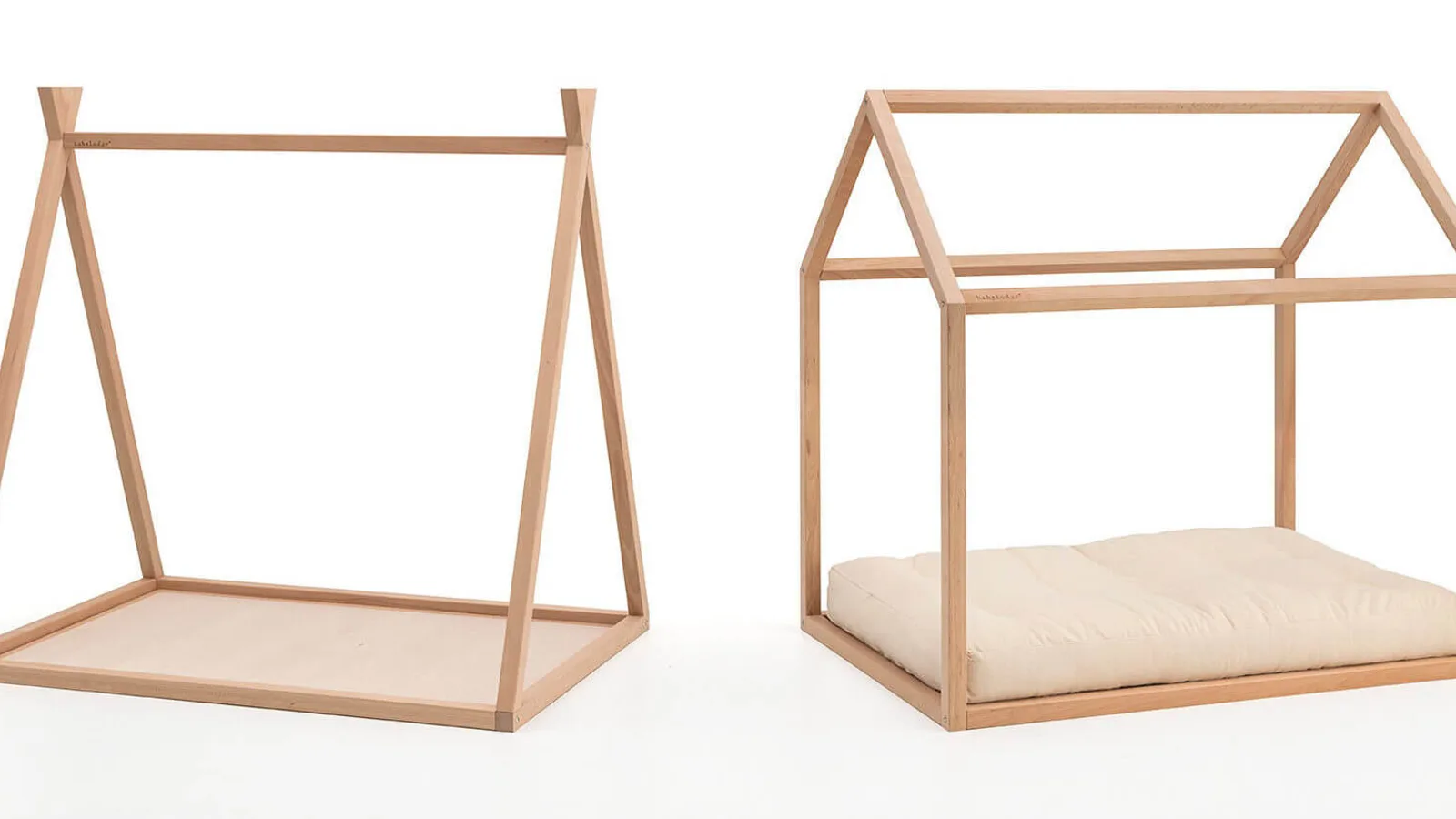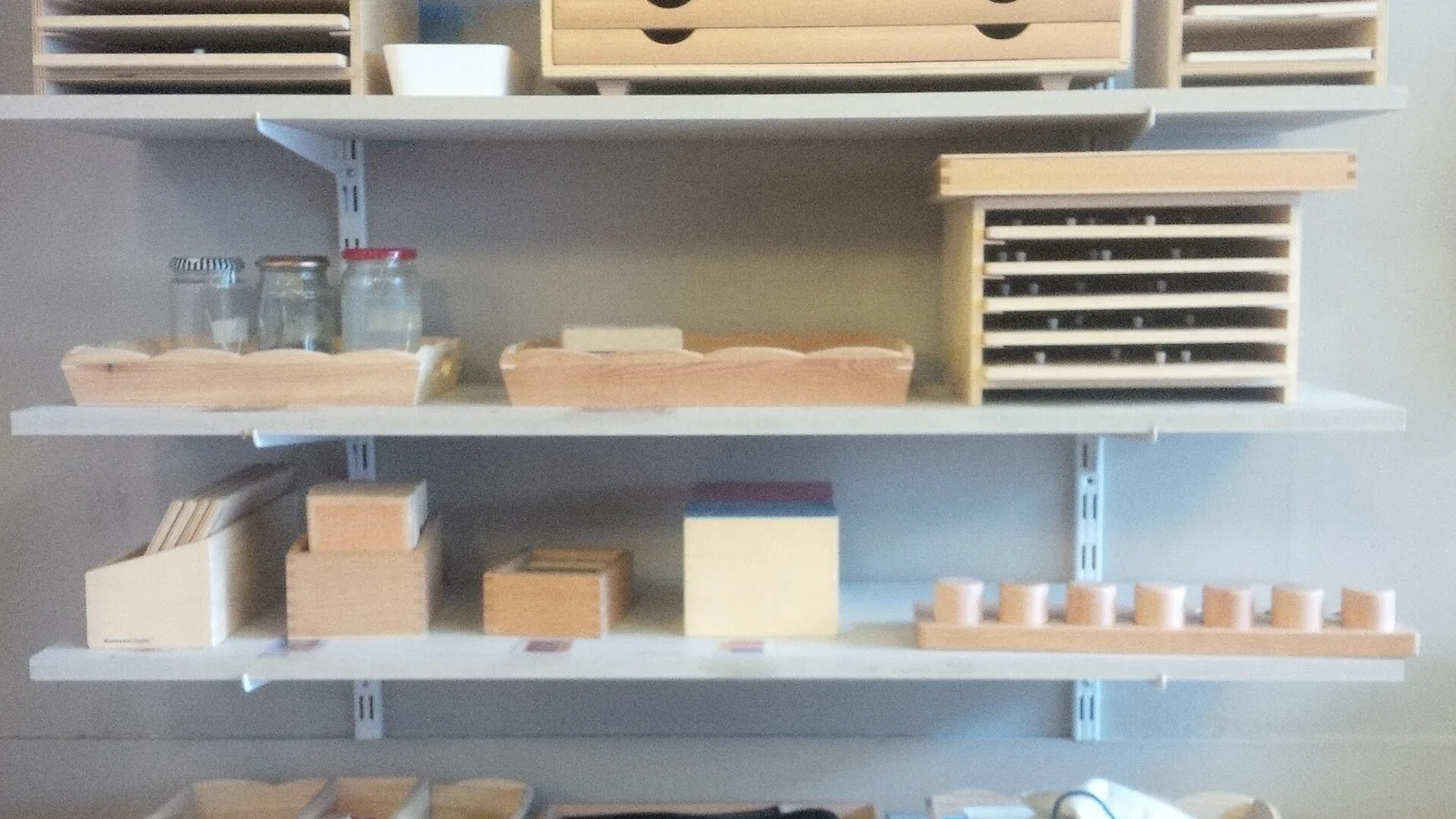
Montessori at home is not about recreating a classroom in your living room. It is a way of seeing the child: capable, developing, and worthy of meaningful participation in family life.
The most useful changes are often quiet ones. A hook placed within reach. Enough time to pull on a sock. A real cloth for wiping a spill. A pause before an adult steps in. These details communicate something powerful: *you belong here, and your contribution matters.*
This guide explains where to begin without buying a room full of materials or turning family life into a lesson plan.
What Montessori at home really means
In a Montessori environment, independence does not mean leaving a child to manage alone. It means giving the right amount of help at the right moment, then gradually stepping back as competence grows.
At home, this usually rests on four connected practices:
- observing before changing the environment
- making useful parts of the home accessible
- inviting the child into real daily work
- protecting time for repetition and concentration
The American Montessori Society encourages families to observe, model, invite, practise, and adapt the environment. That sequence matters. We do not begin with a shopping list. We begin by watching the child we actually have.
Start with observation, not organization
Choose one ordinary part of the day: getting dressed, preparing breakfast, leaving the house, or cleaning up after play. For several days, notice what happens without trying to fix everything at once.
Ask:
- Where does my child pause or ask for help?
- Which objects are physically out of reach?
- Is the sequence clear and predictable?
- Am I helping because help is needed, or because I am in a hurry?
- What does my child repeat willingly?
Observation turns a vague goal such as “be more independent” into a practical adjustment. If shoes are difficult to find, the solution may be one consistent basket. If handwashing creates conflict, the missing piece may be a stable stool, a reachable towel, or fewer verbal directions.
For a deeper framework, read How to Observe Your Child: A Montessori Guide.
Prepare one area at a time
A prepared environment supports successful action. It is orderly, beautiful without being precious, and proportioned to the people using it.
You do not need to redesign the entire house. Select the area that creates the most friction.
The entryway
Offer a low hook, a small seat, and one place for shoes. Keep the sequence consistent. A young child may still need help with fasteners, but can carry a bag, place shoes in a basket, or hang a coat.
The kitchen
Place a cup, plate, napkin, and small water pitcher on a low shelf. Begin with one snack the child can help prepare. Accessibility should always be balanced with supervision and family safety rules.
The bathroom
Use a stable stool, a reachable towel, and only the necessary self-care items. Too many objects make the sequence harder to read.
The play area
Display fewer choices with space between them. Keep complete activities together in trays or baskets. Rotation is useful only when it responds to observation; it is not a weekly performance requirement.
Invite participation in practical life
Practical Life is the bridge between Montessori education and the home because it grows directly from real family activity. Children can wash, carry, sort, prepare, polish, water, fold, and care for shared spaces.
The goal is not a perfectly cleaned table. The developmental value is in the coordinated movement, sequence, concentration, and sense of contribution.
Offer work that is real, brief, and possible:
- carry napkins to the table
- place laundry into a basket
- wipe a small spill
- wash a firm fruit or vegetable
- water one plant with a small pitcher
- match socks
- return books to a low shelf
Show the movement slowly. Use few words while demonstrating. Then allow the child to try, including the imperfect middle stage where learning is happening.
Find age-aware ideas in 25 Montessori Practical Life Activities for Toddlers and Preschoolers.
Offer freedom within clear limits
Montessori freedom is structured. The adult prepares choices that are all acceptable and holds boundaries calmly.
Instead of “What do you want to wear?” try “Would you like the green shirt or the cream shirt?” Instead of repeatedly telling a child to clean the whole room, offer a concrete starting point: “The blocks go in this basket. I will begin with you.”
Limits protect people, materials, and the shared life of the home. They can be both kind and firm:
- “I will not let you hit.”
- “Water stays in the sink.”
- “You may carry one glass at a time.”
- “When the puzzle is back on the shelf, you may choose another activity.”
Consistency is more helpful than intensity. A boundary delivered calmly and predictably is easier for a young child to understand than a long explanation that changes each day.
Protect concentration
When a child is deeply engaged in safe activity, try not to interrupt with praise, questions, or corrections. Concentration is visible when the child repeats a movement, narrows attention, and appears satisfied by the work itself.
Wait. Observe. Let the cycle finish.
This can feel unfamiliar because adults often use language to show interest. A warm presence is enough. When the child looks up or invites connection, respond naturally.
Use rhythms instead of rigid schedules
Young children benefit from knowing what generally comes next, but family life rarely follows an exact clock. A rhythm is a recognizable sequence: wake, dress, breakfast, prepare to leave. It can remain familiar even when the timing shifts.
Use a few reliable anchors:
- a consistent waking sequence
- predictable mealtime participation
- an outdoor period
- a calm transition into rest
- a simple evening closing routine
The purpose is not compliance. Predictability reduces how much the child must process during transitions and creates more room for participation. See A Montessori Daily Routine for Toddlers for a flexible example.
What you do not need
You do not need a perfect neutral playroom, a different activity every day, or expensive replicas of classroom materials. The home has its own purpose. It offers relationships, real work, rest, play, nature, language, and belonging.
Begin with one recurring difficulty. Observe it. Change one element of the environment. Model one clear sequence. Then give the change enough time to become familiar.
That modest cycle—observe, prepare, invite, step back—is a sustainable Montessori practice.
A simple seven-day beginning
For one week, choose a single family routine and keep notes.
- Watch the routine without changing it.
- Identify one barrier to participation.
- Make one object or step accessible.
- Demonstrate the sequence slowly.
- Reduce unnecessary verbal prompting.
- Notice what the child repeats or avoids.
- Keep, adjust, or remove the change based on what you observed.
If your family needs a clearer reset, Calm Home Rhythms offers room-by-room prompts, transition language, observation pages, and a practical seven-day plan.